
PI Perspectives
Our take on important issues affecting the prevention community.

On Wednesday after the election, we gathered as a staff. It was good to be in community, to share and hold space together, and to find comfort and safety in that space. Today we are reaching out more broadly to convey our gratitude to you as our partner, and to affirm our enduring commitment to achieving thriving, equitable communities. In the moment, we encouraged our staff to take the time and space they needed for themselves. Self-care can be a form of resistance. Healing is central to agency and progress. We recognize that for many, this will be a time of grieving, and each of us

Analysis of Governor Newsom’s 2025–26 California Budget Proposal, highlighting impacts on community safety, healthy environments, health equity, and key funding gaps affecting community wellbeing.
Prevention Institute’s 2025 California policy priorities advance community safety, youth wellbeing, climate justice, racial equity, and investments that address longstanding health and economic disparities.
Prevention Institute’s work centers on health equity and racial justice. With support from the Kellogg Foundation, we engaged organizations improving community health to share insights, strengthen partnerships, and inform practices that advance equitable systems.

“For public health researchers and practitioners, preventing displacement may be the single greatest challenge and the most important task in our collective efforts to create healthy communities for all.” – Healthy Development Without Displacement: Realizing the Vision of Healthy Communities for All (Prevention Institute) Stable and affordable housing plays a critical role in the health of communities and individuals, allowing for continued connection to social support as well as proximity to jobs and education. All too often, low- and middle-income communities and communities of color must
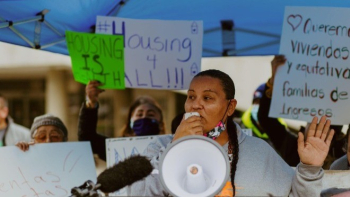
In this piece, Grace Guerrero Ramirez shares how SHINE collaboratives cultivate leadership through mentorship, advocacy, and outreach—creating inclusive, supportive spaces where women and youth feel empowered to lead change in their communities.

Policy Priorities & Commitments Prevention Institute works in partnership with health equity, civil rights, social and racial justice, and public health advocates to champion and support an interconnected portfolio of federal policies, practices, and investments that strengthen community-centered health, safety, and wellbeing. Our overarching advocacy goals are grounded in: Advancing A System of Prevention for Health Equity and Racial Justice. We define A System of Prevention for Health Equity and Racial Justice as the outcomes resulting from collective efforts to champion community-driven

This report highlights promising practices and recommendations for incorporating contextual and experiential evidence into public health decision-making. It outlines how institutions can recognize community conditions and lived experience as valuable forms of evidence. The report offers key strategies for gathering, integrating, and sustaining these forms of evidence to strengthen more equitable and effective prevention efforts.