

Why is it important to start with racial justice?
Why is it important to start with racial justice?
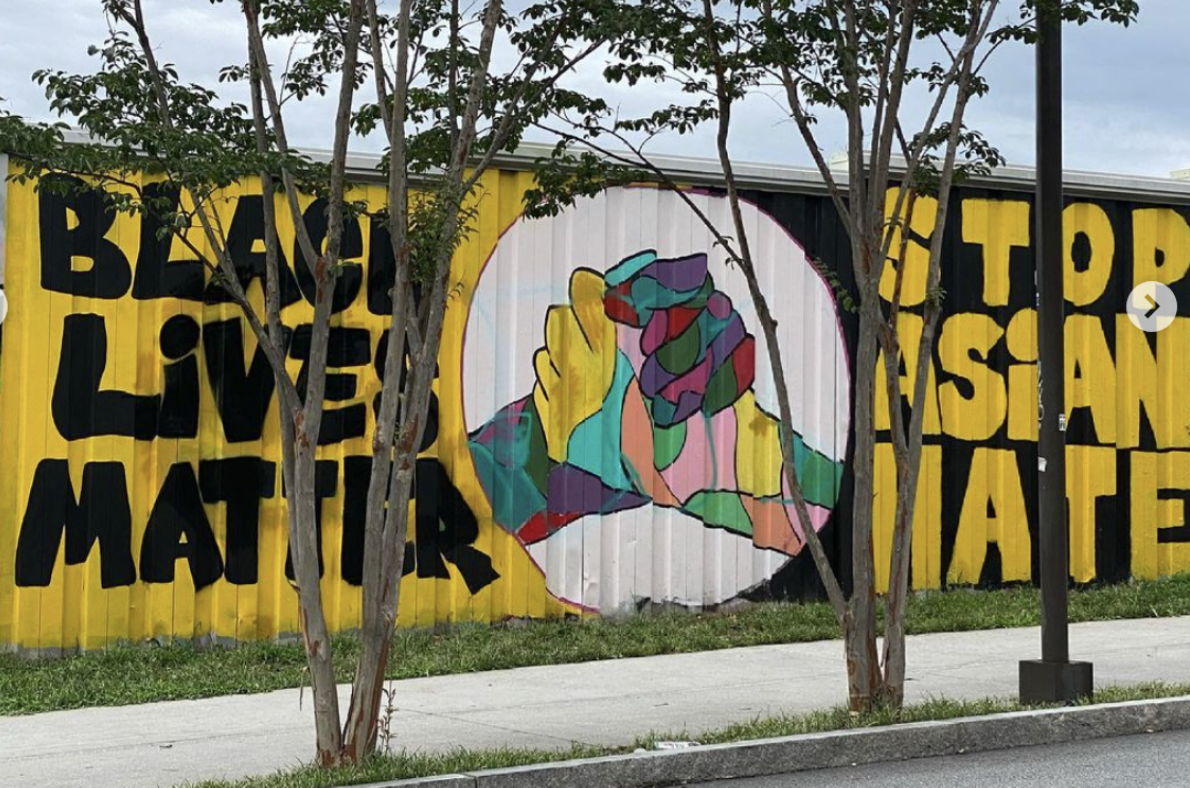
Image by @storymodebae on Instagram
There is a growing movement within the public health field to anchor public health decision-making and action in racial justice principles and ethics. Values, principles, and ethics guide and direct us to close the gap between our aspirations and the reality of our past and present. Without applying racial justice principles, public health practice will unintentionally, yet unequivocally, uphold the status quo. The racial justice principles we recommend to underpin and lead safety work include:
- Racial justice builds the leadership & power of people with life experience of structural racism
- Racial justice requires building shared understanding, even in the face of resistance.
- Racial justice addresses past and current harm and prevents future harm.
- Racial justice promotes procedural, structural, and distribution equity.
- Racial justice is embedded, measured, and incentivized for urgency and accountability.

Leading with racial justice in community safety communication efforts can improve the health, safety, and wellbeing of a community. This includes recognizing the impact that past and present-day policy has had on racial inequities. Structural racism is a determinant of community violence; racial justice is a determinant of community safety. There is a pathway to community violence that is rooted in structural racism and other forms of inequity and injustice. There is also a pathway to community safety that is rooted in racial justice and other forms of social justice. Our unwavering focus should be on the pathway to safety which builds on inherent strengths and assets and generational legacies of resistance and resilience within communities of color and all communities to build healthy, safe, and equitable interdependent multicultural communities. Narrative change and strategic communications efforts should follow suit.
Some of the lessons that we have gleaned from our experience and conversations with those most impacted by structural racism and violence include:
- An anti-racist approach is necessary to actively change policies, behaviors, and beliefs that perpetuate racist ideas and actions. Inequities are not coincidental or accidental, nor are safety inequities a matter of poor choices or access to health-promoting services and resources; they are produced by historic and current-day policies, laws, practices, and procedures that systematically determine the factors, including community conditions, that undermine health and safety. These policies and practices have disproportionately and negatively impacted the lives of people of color living in the U.S. Taking an anti-racist approach goes beyond focusing on inequities based on race to decentralizing the dominant, often white, perspective and narrative – we must champion policies, practices, and actions to ensure that we are rooting out practices rooted in white supremacy. Simply put, it means centering the voices and experiences of intentionally marginalized communities in the planning, implementation, and evaluation of communications strategies. Let community members lead the conversation, engage with policymakers, media, and fellow residents, and identify what worked and didn’t.[1]
- A racial justice approach to community safety must be tailored to the audience and/or decision-making body. Often community members can face difficulty in making their case when facing tough opposition to strategies and narratives. It’s important to tailor messages to your audience and decision-makers while also not ceding progress on the community-defined strategies necessary for safety. This includes using data to support communications and narrative efforts and including a racial analysis of successes and lessons.
- Challenge preconceived and racist notions of violence by ensuring that discussions and narratives are rooted in an understanding of inequities. Racial inequities in rates of community violence, including homicides and non-fatal shootings, result from the cumulative generational impact of structural racism.[2] For example, African American men ages 15 to 34 are the hardest hit by community violence, making up just 2 percent of the population yet account for 37% of all gun homicide victims,[3] while homicide is the second-leading cause of death for Latinos, the third- leading cause of death for American Indians and Alaska Natives, and the fourth-leading cause for white and Asian and Pacific Islanders of the same age.[4] It’s important to message that these and other inequities in rates of community violence result from the cumulative generational impact of structural racism.[5] One way of doing this is by making sure not to share data and statistics about community violence in isolation – use the data in conjunction with other data points including lack of jobs paying a living wage, availability of safe, affordable housing, and other community determinants of health.
Note: The preceding information was adapted from research conducted by prevention Institute for the Annie E. Casey Foundation in 2022, and which formed the bases for a joint publication developed with FrameWorks Institute, Framing Community Safety: Guidance for Effective Communication.
[1] Sims J, Baird R, Aboelata MJ, Mittermaier S. Cultivating a Healthier Policy Landscape: The Building Healthy Communities Initiative. Health Promotion Practice. 2023;24(2):300-309. doi:10.1177/15248399221114341
[2] National Academies of Sciences, Engineering, and Medicine. Community Violence as a Population Health Issue: Proceedings of a Workshop. Washington, DC: The National Academies Press. 2017. https://doi.org/10.17226/23661.
[3] The Coalition to Stop Gun Violence, The Educational Fund to Stop Gun Violence. A Public Health Crisis Decades in the Making: A Review of 2019 CDC Gun Mortality Data. The Coalition to Stop Gun Violence, The Educational Fund to Stop Gun Violence. 2021.
[4] Centers for Disease Control and Prevention, National Center for Injury Prevention and Control. Web-based Injury Statistics Query and Reporting System (WISQARS). Centers for Disease Control and Prevention Website. Updated 7/1/2020. Accessed 7/20/2021.
[5] National Academies of Sciences, Engineering, and Medicine. Community Violence as a Population Health Issue: Proceedings of a Workshop. Washington, DC: The National Academies Press. 2017. https://doi.org/10.17226/23661.