
What is narrative change and why is it different from strategic communications?
What is narrative change and why is it different from strategic communications?
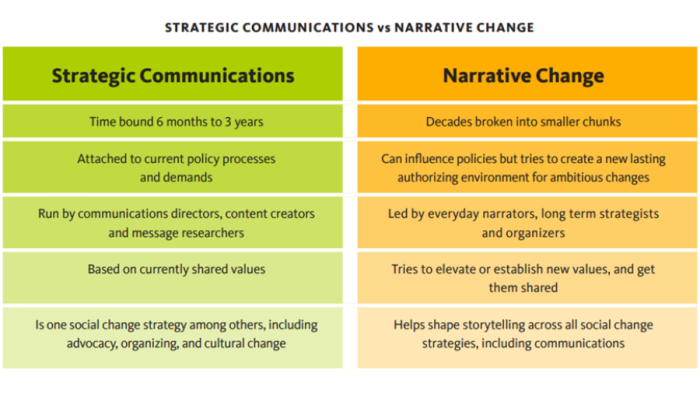
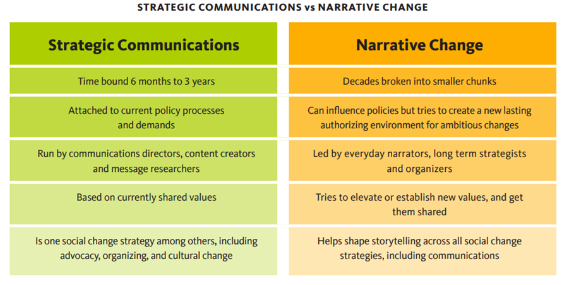
Narratives are shared stories about the way things work which help to shape our consciousness and how we navigate our way through the world. These stories can influence beliefs, behaviors, and norms, and in turn can influence policy change. But while they are complementary, there are distinct differences between narrative change and strategic communications.
Narrative change is about long-term efforts to elevate certain values – in our case these are related to racial justice, community, and safety – and diminish others so that we can engage different audiences and decision makers. Strategic communications, on the other hand, is a way to create frames, messages and stories to influence a particular policy change or outcomes. Much of the time, we conflate the two. For example, a community organization sharing data and research about rates of gun violence and their impact on certain neighborhoods to advocate for policy change is strategic communications; that same organization working with community members to share how violence prevention activities such as greening vacant lots or implementing restorative justice practices have positively impacted their daily lives and made them feel safer is narrative change. It’s important for the two types of strategies to be implemented in concert; working on narrative change can help us challenge the dominant ideas that shape the world and the policies and practices that influence our everyday lives.2
See below for a graphic from the recent publication by the Convergence Partnership, Funding Narrative Change, An Assessment and Framework.
Terms and Definitions:
Communications strategy - Tactics for creating frames, messages and stories to influence a short or medium term policy or practice outcome (e.g., support pending legislation or policy approaches).
Framing - Framing refers to the choices we make in what we say and how we say it. Framing matters because it affects how people hear us, what they understand, and how they act. Using the same frames consistently can strengthen and reinforce messaging, and helps move the conversation further and stimulate action faster.
Messaging - How you communicate to your audience.
Narrative - The themes and ideas that permeate collections of stories. Narrative strategy is “a long-term effort to raise certain values and diminish others in ways that engage multiple kinds of narrators and audiences, and that are not bound by short term communications needs,” and community narrative power building is “growing narrative power in the hands of local communities that experience the outcomes of harmful and helpful narratives.”
For additional resources, we recommend the following:
- Funding Narrative Change, An Assessment and Framework, a report by Convergence Partnership and an accompanying webinar recording for practitioners
- The Narrative Initiative