
Section 3: Connecting racial justice policy and systems change with narrative change
Section 3: Connecting racial justice policy and systems change with narrative change

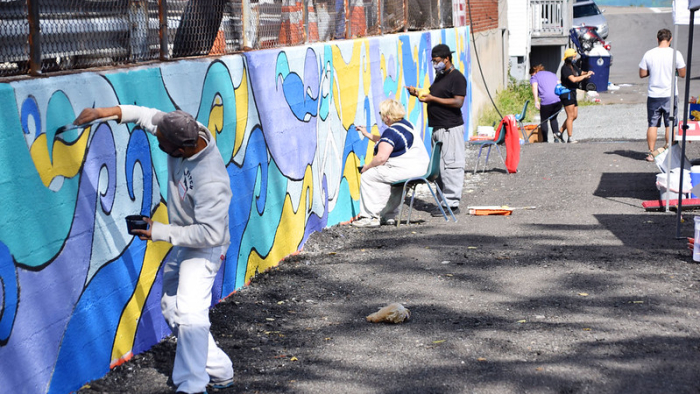
Image by Ethan Pepin (Neighborways) on flickr
Narratives are shared stories that help to shape public consciousness and collective values. They reflect both our past and our present, and importantly, can convey a strong sense of possibility for the future. To maximize the effectiveness and reach of racial justice-grounded violence prevention strategies, it is important to connect policy and systems change efforts to narrative strategy development. Creating these mutually self-reinforcing connections grounds violence prevention work in a more long-term, affirmative vision of what is achievable when communities are safe and racially just. When we build community narrative power to spread stories describing the world we want to inhabit, we can develop long-term policy strategies that ask for everything that communities deserve. If you have not done so already, review Module 2 for more information on developing a racial justice narrative strategy. If you have not done so already, review Module 2 for more information on applying racial justice principles to violence prevention narrative change, framing, and communications.
Learning Outcomes
- Explore resources and examples that support connections across racial justice narratives, policy, and systems change
Voices from the Field
- Inspiration for You[th] Podcast: Created by A New Deal for Youth Changemakers, a group of young activists leading the change they want to see across the country, the podcast serves as a platform for young people to share their voices, their stories, and the ways they’re creating change in their communities.
- Momentum: A Race Forward Podcast features movement voices, stories, and strategies for racial justice. The episodes uplift narratives of hope, struggle, and joy, to build the momentum needed to advance racial justice in our policies, institutions, and culture.
- Prevention Institute's Moving Upstream podcast features several episodes with violence prevention leaders at the intersection of narrative change and policy, including: Community safety through investing in youth: Harris County youth justice community reinvestment fund and Community organizing to prevent violence.
Resource Spotlight
- Adopting a narrative transformation strategy for policy and systems change: This session of Prevention Institute’s three-part virtual learning series, Lessons Along the Journey: Taking Action Toward Racial Justice in Public Health Systems features a discussion on PI’s learnings and efforts to better integrate our narrative and policy strategies.
- Specific lessons and reflections include:
- The benefits of partnering with and learning from artists and culture bearers to ground narrative and policy work in the positive vision of the world we want to achieve;
- Changes in the approach to policy analysis and partnerships that result from an intentional integration of policy and narrative strategy;
- Strategies and challenges in shifting from a reactive to a proactive approach to narrative and policy development and analysis through a racial justice frame;
- How to responsibly find and cultivate an organization’s policy role (i.e. policy “lane”) while not overstepping or avoiding responsibility; and
- How to develop accountability mechanisms.
Resources
The following resources and organizations offer helpful guidance across narrative strategy, inclusive language and framing, and the inclusion of arts and culture that can be applied to your policy work:
- Narrative Arts is a non-partisan social justice organization led by narrative and story strategists, artists, and community organizers that are dedicated to challenging injustice by empowering communities to change the stories on the most enduring social justice challenges of our time.
- Narrative Initiative weaves the power of narrative with other social justice strategies to achieve long term equity by maximizing opportunities to nourish and grow narrative power, equipping narrative changemakers, and bonding communities to pursue long-term progress for social justice.
- RadComms offers resources, trainings, trainings and network building to grow and strengthen the ecosystem of social-change communications and movement building that focuses on building narrative power.
- The Social Justice Phrase Guide provides a concise way to discuss issues of social justice from the Advancement Project and The Opportunity Agenda.
- Racial Equity Tools offers resources on narrative change to counter harmful racialized narratives and create new narratives.
Questions for reflection
- How do your current policy and systems change efforts contribute to narratives that shift collective understanding on safety and violence prevention? What might it look like to strengthen these connections?
- How are you leveraging your policy and systems change efforts to further an affirmative vision of safety that invests in what communities deserve and need for long-term thriving? Whose voices and leadership are you elevating and amplifying in your storytelling and communications efforts around policy?
- How do your policy and systems change partnerships reflect an emphasis on building, supporting, and sustaining community narrative power? Who else can you partner with and learn from in this space?