

Reframing Your Messages for Stronger and Broader Impact
Reframing Your Messages for Stronger and Broader Impact
The following framing strategies were developed through a collaboration between Prevention Institute and The FrameWorks Institute to help practitioners (community based organizations, health departments, etc) communicate about community safety. It’s important to note the context of the last several years, including the COVID-19 pandemic, uprisings following the murder of George Floyd and dozens of other Black Americans at the hands of police, and the recent rise in other types of gun violence, which have created opportunities for more conversations about how to create safety and address violence.
The strategies below mainly fall within three categories:
- Community safety
- A public health approach to community safety
- Community determinants of health and safety
Make sure that you frame your own language to your own audience. You don’t have to use the examples here word-for-word. Incorporate this framing and these suggestions in ways that meet your community’s needs and which feel authentic and realistic for your audience.
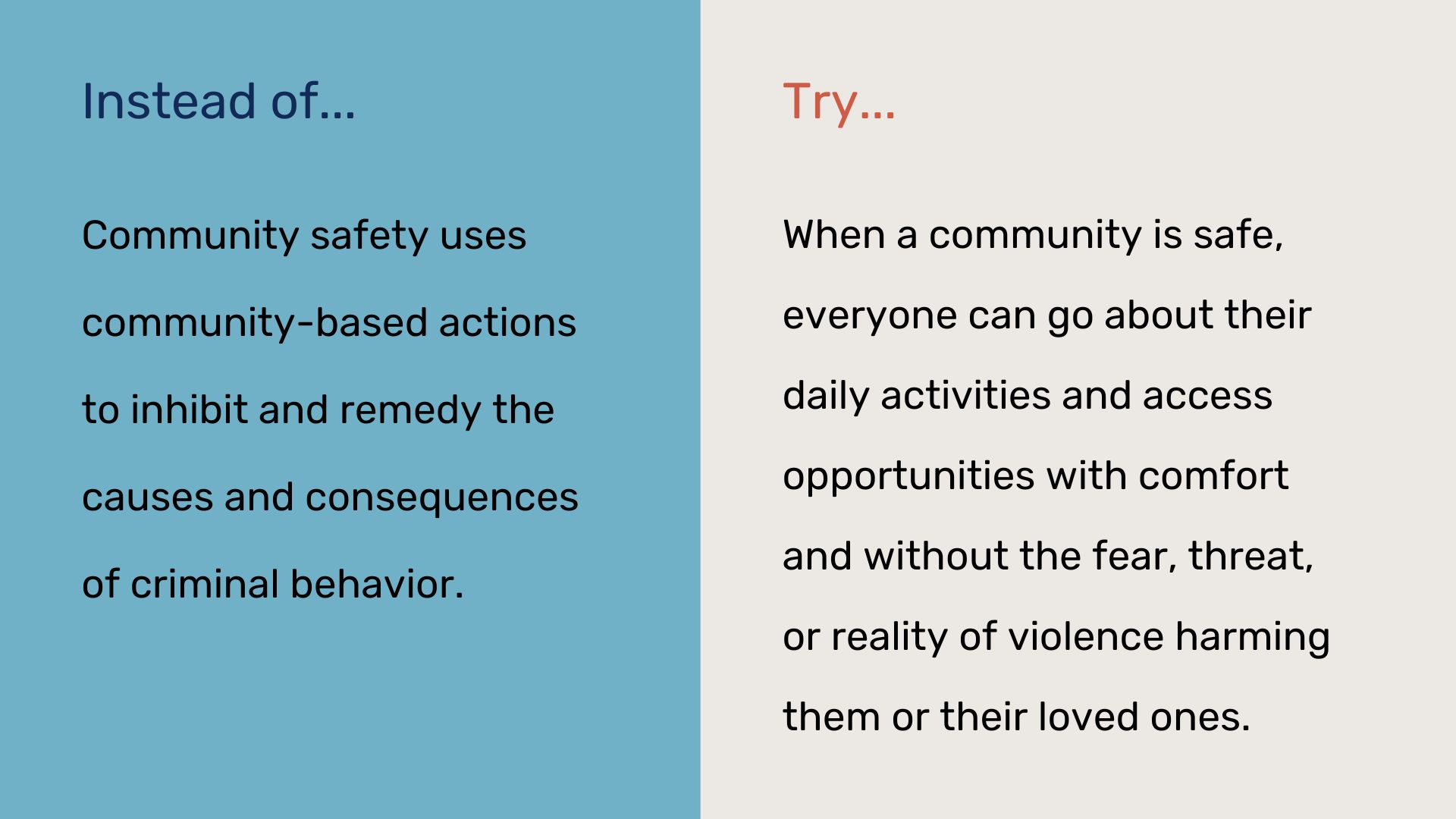
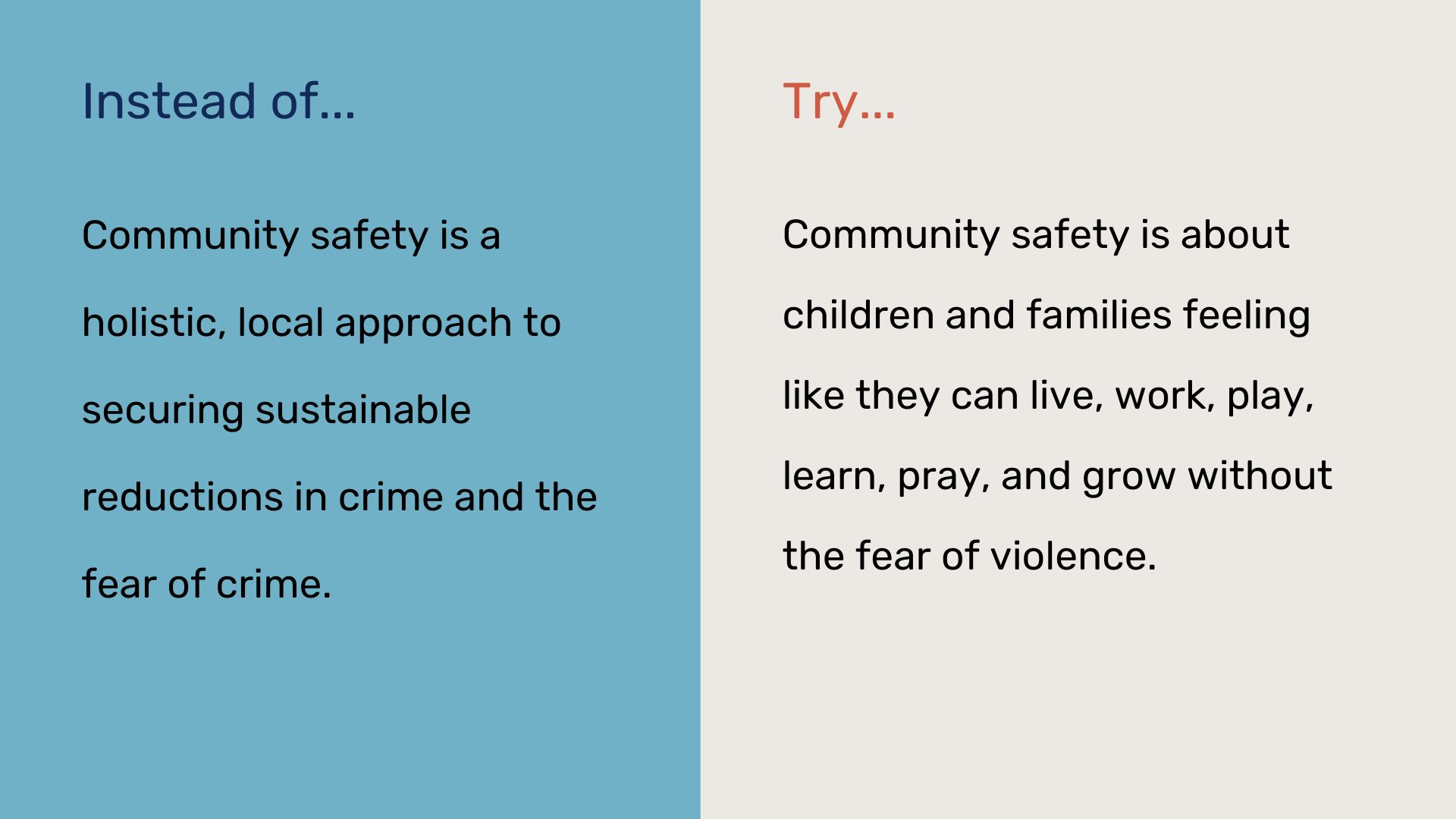
Example: How to Talk About Community Safety
- Start with and center “community”
- Talk about community broadly and inclusively
- Use aspirational language: what it creates before what it prevents
- Frame your own language - communities should define what community safety means for them
Example: A Public Health Pathway to Safety
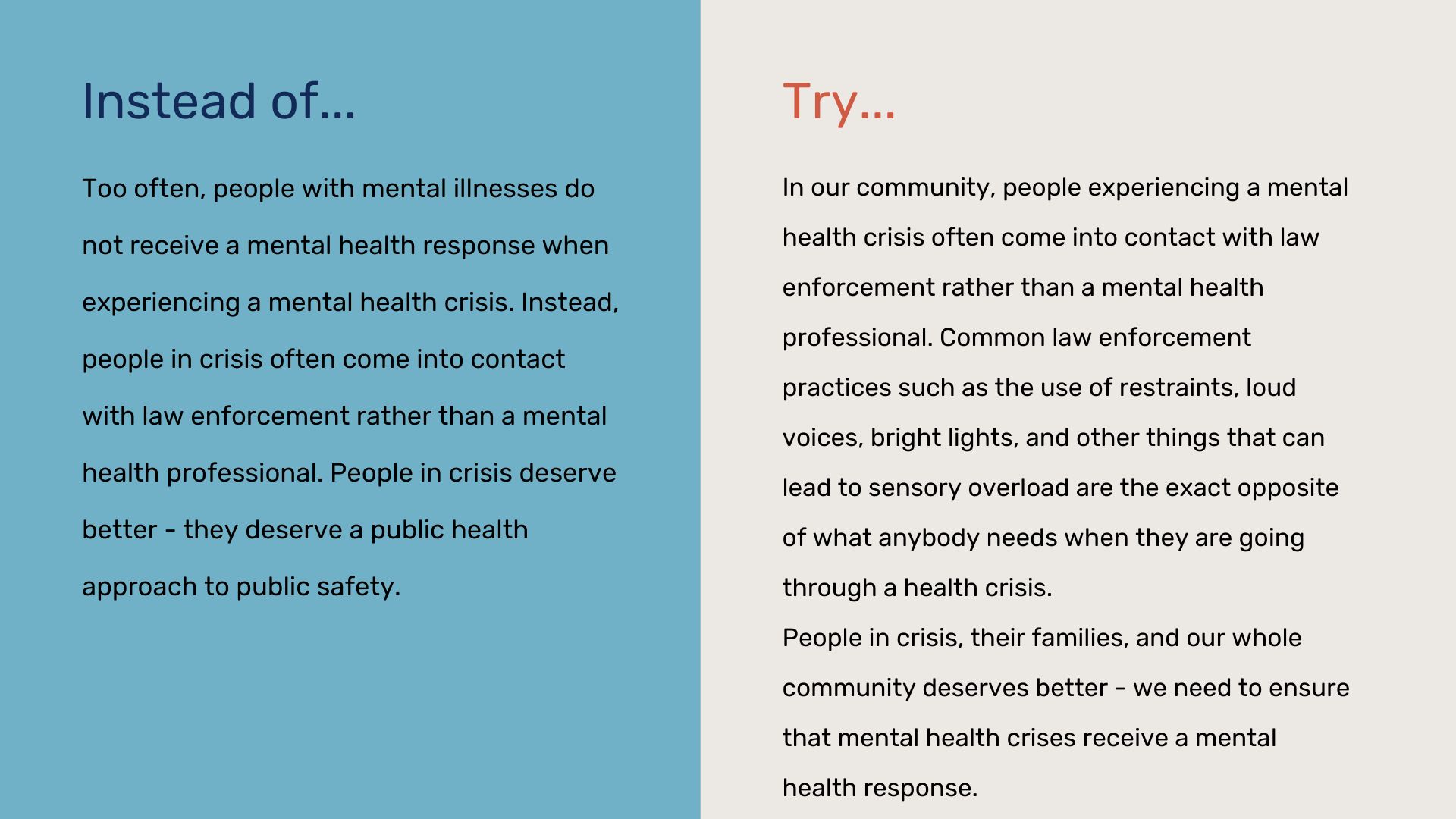
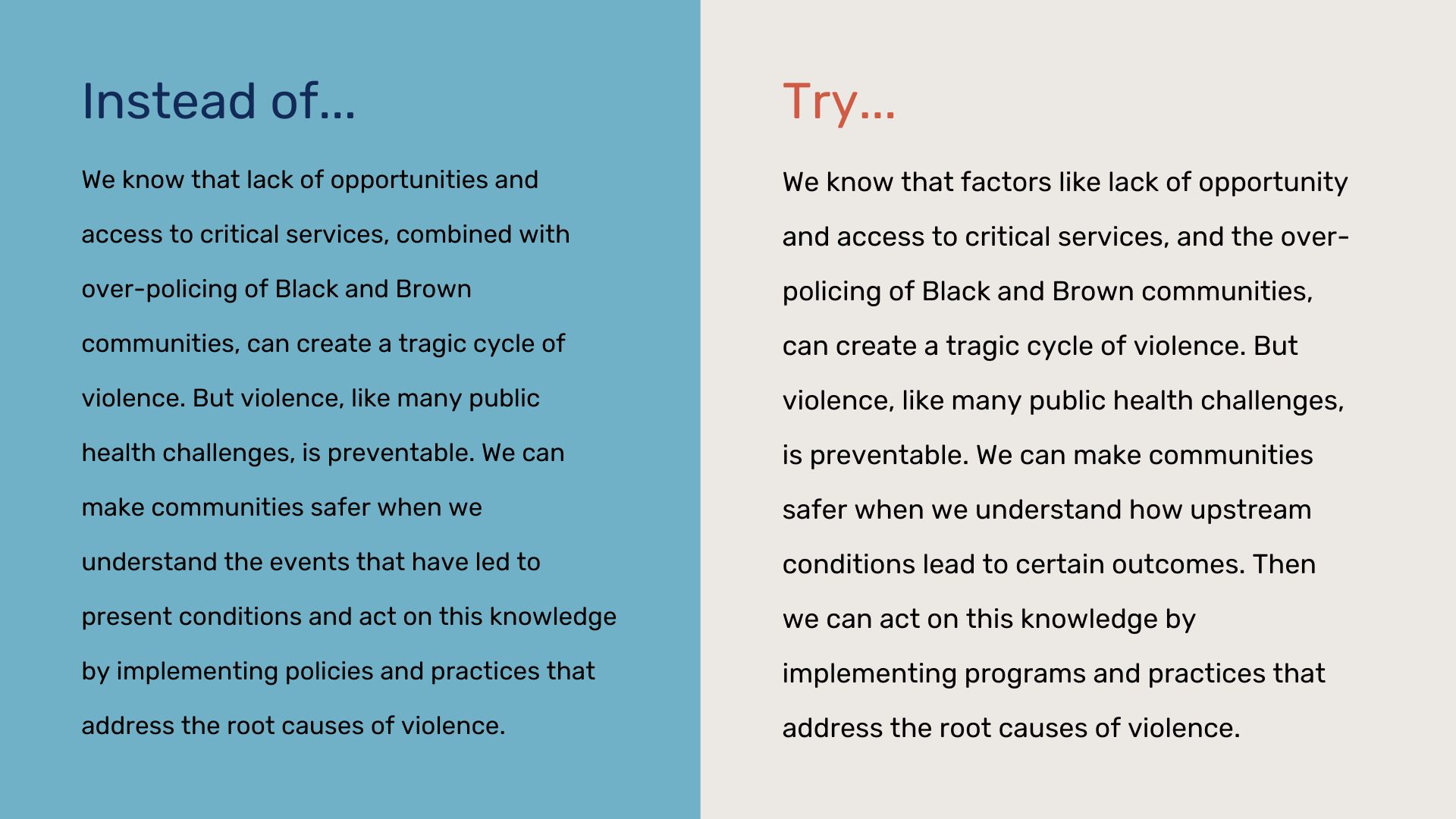
Communities can be safer when we understand how structural racism and other systemic barriers have led to present conditions and act on this knowledge by implementing policies and practices that address the root causes of violence. Here are four key defining features of a public health pathway to community safety:
- Truth, racial healing, and transformation
- Community leadership and power
- Data and evidence-driven
- Collaborative action[1]
Don’t tell people that community safety can be addressed through these defining features and approaches, show them what it looks like and how it works. Make it clear that this approach is an effective alternative to current practices like over-policing, which often has unintentional, negative impacts on communities. And normalize community safety as an approach we all agree on so people see themselves as part of the solution.
Example: Community Determinants of Health and Safety
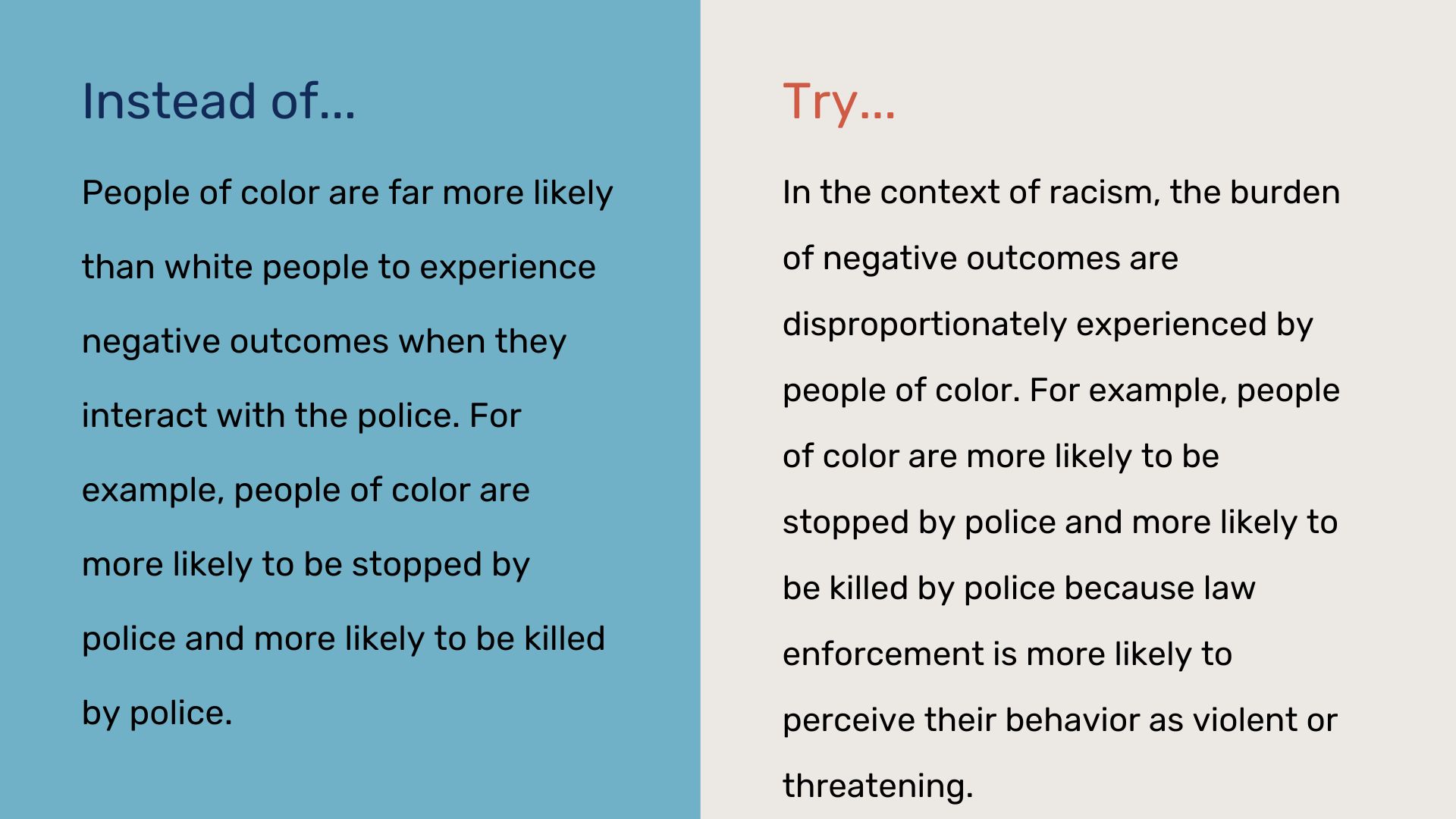
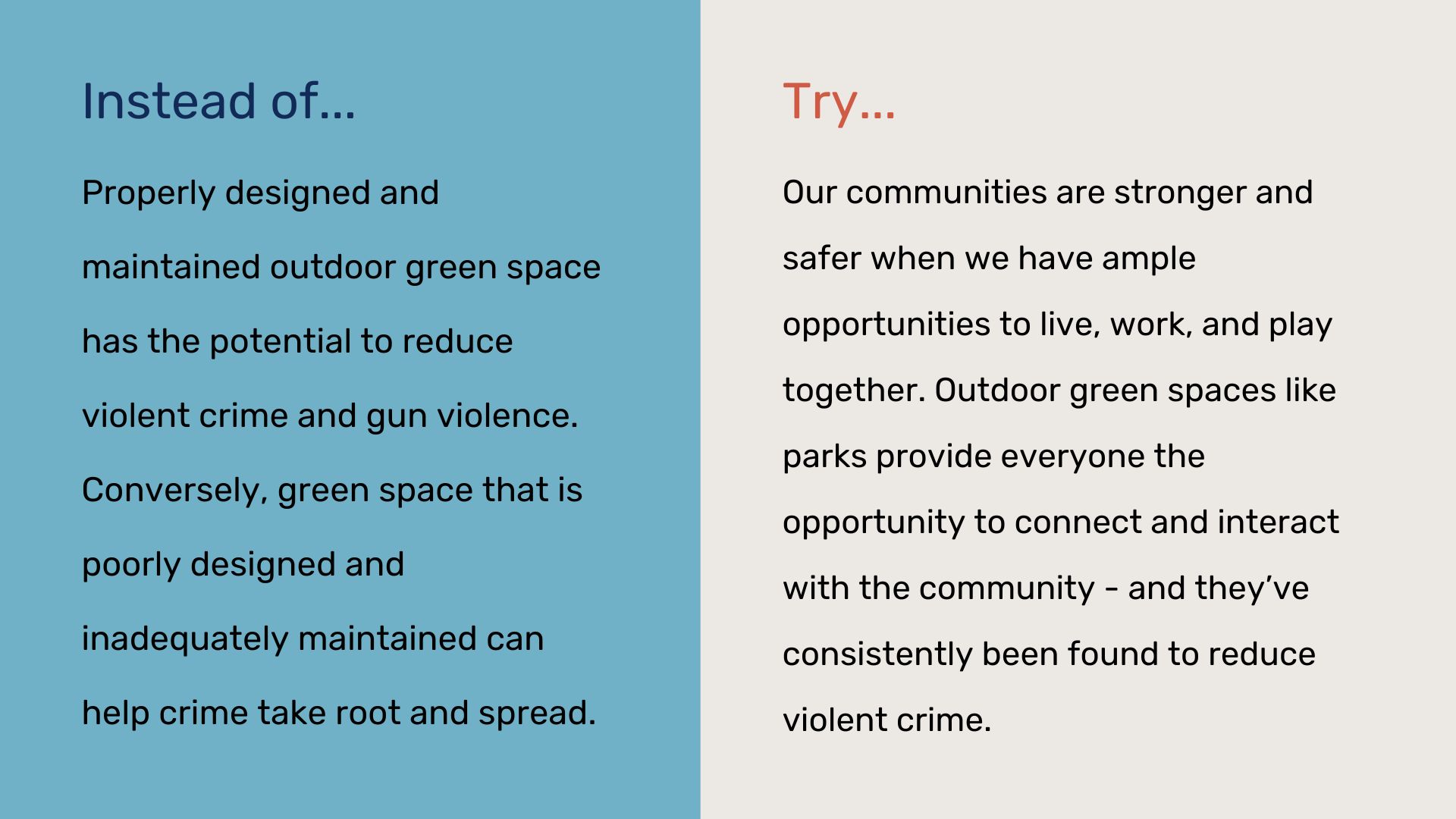
The terms “social determinants” or “community determinants” are technical and inaccessible to most people. At the same time, people think about health in highly individualized ways. Here are some recommendations for reframing messages so that they focus on how community conditions impact behaviors related to safety and violence:
- Name the determinants/factors immediately
- Name structural/systemic racism explicitly
- Make the attribution of responsibility clear using a concrete subject and an active verb — otherwise, a communication might leave space for people to assume a problem lies with the people experiencing it
- Point to systems, structures, processes, practices, policies, and/or ideological factors to increase support for structural/systemic solutions
Some potential talking points include:
- Discrimination and poverty increase stress and trigger long-term health problems for communities of color
- Unjust and unfair practices have caused harm and continue to cause harm today
- Implicit bias and biased practices built into our social systems shape experiences among groups
- Over-policing places certain neighborhoods at greater risk of police violence
[1] Community Safety Realized: Public Health Pathways to Preventing Violence. Prevention Institute and Big Cities Health Coalition, May 2021.