

Messaging Examples that Lead with Racial Justice
Messaging Examples that Lead with Racial Justice
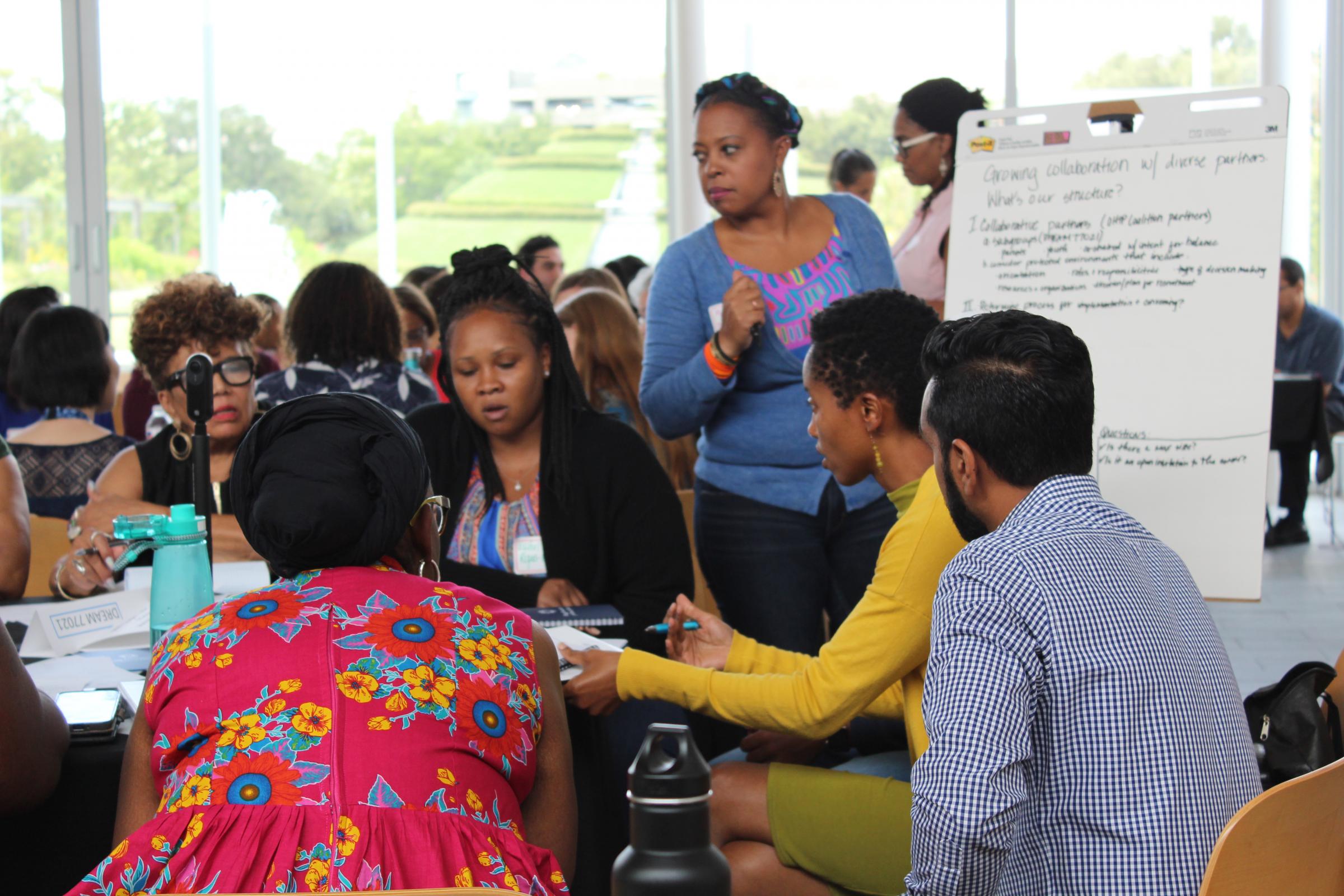
Photo by Prevention Institute's Communities of Care Initiative
We’ve seen many successful examples of narrative and messaging that lead with racial justice to address and prevent violence. Below we share a few examples that might help inform your work:
- Commentary: We are three young black men living in City Heights. This is why we protest: This commentary written by three young activists in San Diego’s East African Refugee community highlights the importance of their involvement in protests against police violence in their community.
- Women of Bears Ears Are Asking You to Help Save It: This opinion piece written by the Women of Bears Ears, a group of Indigenous women supporting the protection of ancestral lands, leads with the strengths and priorities of Indigenous communities in protecting their sacred land from fossil fuel development.
- Art, Imagination, and the Quest for Racial Justice: In this mini-lesson from Facing History, students learn about the power of art as a tool for social change and explore how Black Lives Matter activists are using art in the fight for racial justice.
- The Black Press Has Always Covered Solutions: This piece from The Solutions Journalism Network highlights how the Black press often leads with solutions in its coverage of racial justice and health equity writing. Some examples include the series, “Lost Innocence: The Adultification of Black Children,” which over several stories examined the impact of adultification on young people and how this bias can be recognized and addressed; and the “Solving Sacramento” series, which looks critically at the issue of housing in one of America’s most expensive real estate markets and the potential solutions, while also looking at the work of the nonprofit Sacramento Community Land Trust to help people gain access to permanently affordable housing.