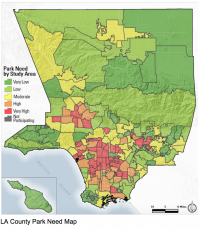
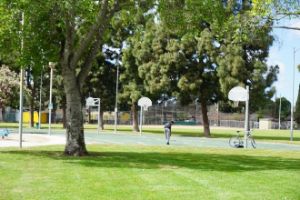
Parks, trails, community gardens, and other urban green spaces serve as fundamental building blocks to create healthy, vibrant communities. In principle, public parks belong to everyone. In practice, access to parks and recreation areas is anything but equal. Many communities with low household incomes and communities of color have few—or no—green spaces, and existing parks and recreation areas may be poorly maintained, understaffed, unwelcoming, and unsafe. Urban green spaces create myriad social, health, environmental, and economic benefits for communities. Access to neighborhood parks can bring communities together, support physical health, promote mental wellbeing, enhance child development, and prevent youth violence. ( Read our new blog post for the details.) They can also provide environmental benefits like regulating air temperature, reducing air pollution and greenhouse gas emissions, dampening noise, capturing stormwater runoff, and protecting habitats for urban wildlife. Park-poor communities, on the other hand, are systematically limited in their access to these benefits. |