At Prevention Institute, we’re avid consumers of the news, which means—in this day and age—that we’re frequently disheartened by the divisiveness and disparagement of what we read, watch, and listen to. That’s why we think it’s important to also remember what we're grateful for.
Thankfully our work at PI brings us into contact with an abundance of hope and inspiration in the form of partner organizations, community leaders, and community residents who are making a real difference in people’s lives by ensuring their neighborhoods are thriving, equitable places to live.
We’d like to share the stories of some of those changemakers with you through recent videos, podcasts, and written stories. We hope they'll remind you that even in this difficult time, there are many reasons for hope and gratitude.
Blog: From Emergencies To Equity: The Growing Role Of Hospitals In Community Health This Health Affairs blog, coauthored by PI staff members and Jason Lacsamana of the Providence St. Joseph Health Community Partnership Fund, describes the
Intersections Initiative. Intersections is empowering coalitions from seven California communities served by Providence St. Joseph Health System hospitals to increase health equity by taking on the community determinants of health such as housing, education, and income. Intersections is funded by the Providence St. Joseph Health Community Partnership Fund
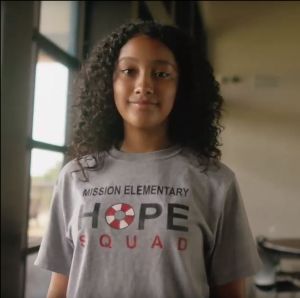
Video: HOPE Squad (8:42)
Through the
Making Connections initiative, the Southern Plains Tribal Health Board staff are making suicide prevention among American Indian youth a priority. The project empowers students in Anadarko and the Oklahoma City area to address and prevent suicide among their peers. It trains young people in three public schools to be the eyes and ears among their peers to look for warning signs of suicide. Making Connections for Mental Health and Wellbeing among Men and Boys is a collaboration of PI, the Movember Foundation, and 13 community-based coalitions around the US.
Podcast: Community organizing to prevent violence (41:58)
Reggie Moore, director of the Milwaukee Office of Violence Prevention and a PI board member, describes how the
Milwaukee Blueprint for Peace was created with leadership from communities most directly impacted by violence. The development and implementation of the blueprint, a comprehensive violence-prevention plan, has coincided with a three-year decline in Milwaukee homicides and non-fatal shootings. This podcast was made possible by the Langeloth Foundation.
Video: East San Jose PEACE Partnership (2:31) (Watch the
Spanish-language version.)
The
East San Jose PEACE (Prevention Efforts Advance Community Equity) Partnership is a group of residents and organizations working together to build a healthy, peaceful, and empowered community in East San Jose. The partnership is using community strengths—community pride, diversity, creativity, and a rich history of community activism, among others—to counteract the conditions that have led to a high level of community violence and trauma in East San Jose. PI is honored to have worked in partnership with the Santa Clara County Department of Public Health in support of the PEACE Partnership.
Radio interview: Genoveva Islas of Cultiva la Salud (interview starts 33 minutes into the show).
KVPR’s Valley Edition program interviews Genoveva Islas of Cultiva La Salud about
Safety Through Connection, a program designed to support community-based approaches to prevent intimate partner violence. Through the program, five California collaboratives received planning and capacity-building grants to address the risk of intimate partner violence among low-wage workers, rural and tribal communities, immigrants, and other communities that face high rates of this type of violence. Safety Through Connection is facilitated by PI and funded by the Blue Shield of California Foundation. Based on the strength of the five collaboratvies' efforts in year one, Blue Shield of California Foundation has made the decision to invest in two more years of implementation.
Podcast: What Medellín can teach us about healthy and equitable land use (28:19)
PI’s deputy executive director, Manal J. Aboelata, talks about her recent trip to Medellín, Colombia to learn about their innovative improvements to the city’s infrastructure. She explains how this city that was not long ago called “one of the most dangerous cities on earth” has transformed itself through public health investments, and what we in the United States can learn from its example. This podcast was made possible with support of the Durfee Foundation.