New PI podcast episode explores zoning, displacement, and public health
Can efforts to improve community conditions avoid contributing to displacement?
From state legislatures and city councils to grassroots movements to the campaign trail, housing affordability, zoning policies, displacement, and residential segregation are finally getting the attention they deserve—not just in the news but more importantly as the subject of policy proposals.
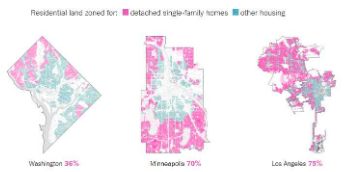
In December 2018, the Minneapolis City Council eliminated single-family zoning in a move to boost construction of affordable housing and address residential segregation by race—with a similar policy currently under consideration by the Oregon state legislature. Other approaches, like strengthening protections for tenants, are also gaining traction. Inglewood, a majority Latino and African-American city in Los Angeles County where 64% of residents are renters, recently passed tenant protections including rent control and relocation allowances for some residents who’ve been evicted.
“Displacement—or even the threat of displacement—can fray people’s sense of place, their connection to their neighbors, a sense of feeling rooted and secure and like you have some agency in what’s happening in your own life and your community.”
- From PI’s new podcast, Land Use, Gentrification, and Health.
Our latest podcast episode, a conversation between PI’s Rachel Bennett and Sarah Mittermaier, explores these themes from a public health perspective—asking how zoning policies, gentrification, and displacement affect health and how those of us working in the field of public health can support stable, affordable housing.
Listen to the full podcast episode here. You can also subscribe to the Moving Upstream podcast, so that you never miss a new episode.
Healthy Development without Displacement: Realizing the Vision of Healthy Communities for All
One of the public health field’s core commitments is the idea that everyone has the right to live in a healthy community. But how do we make that right a reality? How do ensure that efforts to improve access to parks, transit, healthy food retail, and other health-supporting resources don’t contribute to displacement?
We also recommend you check out a story in yesterday’s New York Times that maps residential zoning policies across 10 US cities, examining how zoning policies can perpetuate inequities, making it less likely that renters “live among homeowners, or working-class families among affluent ones” or that children of color live near high-quality schools.
Graphics credit: the residential zoning maps above come from this story in the New York Times.
Need Our Help?
We’ve got more than 25 years of experience supporting community collaboratives, practitioners, funders, and jurisdictions. Check out our services and reach out.