
Sustaining Ourselves, Sustaining Our Teams, Sustaining Community Safety
Grace Guerrero Ramirez
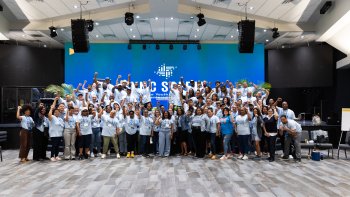
As community leaders pour their hearts into healing their communities and making them safer, the question always lingers: Who – what – heals these healers? In June 2026, SYNC Safety partners came together to discuss the possibilities and tensions in tending to community members’ needs as well as their own. SYNC is a learning community that brings together community-based organizations (CBOs) across the U.S. working along the continuum of violence prevention.
SYNC partners offer their communities medicine in the form of healing, care, and belonging. Juggling many roles and responsibilities, they stand ready to respond to community needs that don’t wait because, too often, lives are at stake. Partners feel the need to be “on,” present and alert, even when they are “off the clock,” especially when other staff need to step back to take their time off. Mothers who do this work may face challenges in supporting their communities while also caring for themselves and their children at home – the same children who are part of the communities they support.
Meanwhile, political unrest and systemic violence continue to harm communities, maintaining conditions for violence and precarity, and intensifying the exhaustion of those working to prevent it. Still, community partners work relentlessly to nurture and support their communities.
When systems are not designed to heal, how can community leaders build a sustainable, organizational culture rooted in care and healing, while caring for their communities?
SYNC partners discussed cultural and organizational practices that support collective care among their teams. Some rely on ancestral medicine to guide and ground them through the stress they face daily, including Indigenous practices like participating in sweat lodge ceremonies and Círculos (also known as healing or kinship circles). A sweat lodge is a sacred structure where different types of healing and purifying ceremonies take place. Círculos are safe spaces where people connect and support one another through dialogue, listening, and stories. Other partners practice limpias (cleansings) with their staff, which are spiritual rituals used to cleanse a person from negative energy.
Partners also highlighted organizational policies that offer paid leave, including dedicated leave staff can use to care for themselves beyond vacation time, and time off following a work-related incident like the death of a program participant. In addition to paid time off, partners elevated the importance of mentoring and preparing staff to take on different levels of responsibility, which allows staff to step in when colleagues need to step back from their work to grieve or care for themselves.
Building a culture of care is foundational to sustaining the people and the work. Organizational cultures can reinforce a commitment to care by providing the resources and support that staff need to take time off and tend to their wellbeing in the ways that work best for them. Building cultures of care also demands holding systems accountable to that care. What would it look like for systems to operate from a place of healing and care so that everyone in a community – including the people who live and work there – can thrive and rest?
Thank you to Leo Lopez and Osvaldo “Ozzie” Cruz at the National Compadres Network for your insights and facilitation of this important discussion, and to the SYNC CBOs for generously sharing your stories and experiences.
Resources:
-
Leadership Network Reading & Listening List (AESOP Leadership Network)
-
Webinar: CVI Capacity Building and Supporting Frontline Staff (CVI Action Plan Committee)